The Herbalism of Cooling Foods: What to Eat When the Heat Is Unbearable and Why It Works
This post contains affiliate links. As an affiliate for Amazon Associate, I earn from qualifying purchases at no additional cost to you.

There is a reason you crave watermelon in July and not in January. Your body knows something that traditional medicine systems formalized thousands of years ago, that certain foods genuinely help the body shed heat, and others make you feel hotter and heavier even on a cool plate.
I had been making summer salads and cold drinks for years before I understood there was actual physiology behind why some of them made me feel better in the heat and others, despite being cold, left me sluggish and overheated. Learning the herbalism of cooling foods changed how I eat through the entire summer, and it is some of the most practical, immediately applicable knowledge I have come across in my herbal studies.
This post covers what cooling foods actually are, why they work, and how to put them together into a summer plate that does more than just taste good.
What Cooling Foods Actually Are
In Traditional Chinese Medicine and Ayurveda, foods are classified by their energetic effect on the body, not just their temperature when you eat them. A cooling food helps clear internal heat, support hydration, and calm the kind of inflammation and agitation that summer heat aggravates. In Ayurveda this is about pacifying Pitta dosha, the fiery energy that flares up in summer. In TCM it is about clearing excess heat from the body's systems.
The modern physiology maps onto this remarkably well. Most traditional cooling foods share measurable qualities: very high water content, a light and easily digestible nature that does not generate much metabolic heat during digestion, and often a mild diuretic effect that helps the body release fluid and heat. The ancient framework and the modern explanation are pointing in the same direction.
The Metabolic Heat Problem Nobody Talks About
Here is something most people do not know: digestion generates heat. Breaking down fat-heavy, protein-heavy, and fried foods requires significant metabolic work, and that work generates internal heat. On a hot day, eating a heavy meal means your body is fighting external heat and generating internal heat simultaneously, which is why a BBQ lunch so often leaves you sluggish and overheated rather than satisfied and energized.
Choosing light, water-rich, easily digestible foods is not about restriction. It is about reducing the internal heat burden so your body has the resources it needs to regulate temperature rather than spending them on digestion.
One Important Note About Ice Cold
In Traditional Chinese Medicine, extremely cold drinks and frozen foods are thought to shock the digestive system and deplete the digestive fire needed for healthy digestion, leading to bloating, sluggishness, and paradoxically reduced ability to regulate temperature. Cool and room-temperature water-rich foods do the genuine cooling work without that downside. It is a counterintuitive but consistent recommendation across several traditional medicine systems, and many people find it makes a real difference when they experiment with it.
The Cooling Foods Worth Knowing
WATER-RICH FRUITS AND VEGETABLES
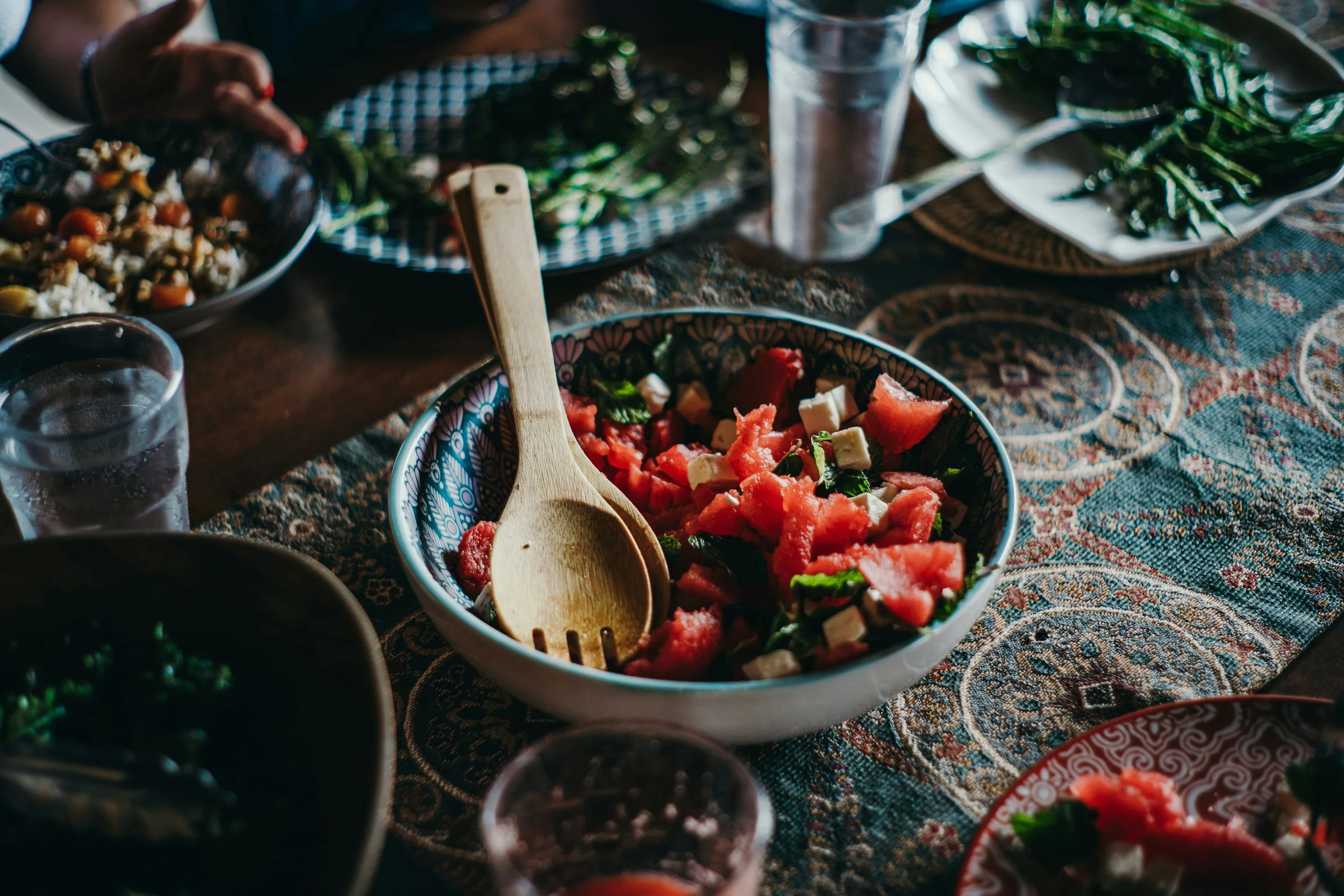
Watermelon is the classic and it earns that reputation. At over 90 percent water it is one of the most hydrating foods available, and Traditional Chinese Medicine specifically recognizes it as a food that clears summer heat and supports the body during hot weather. It also contains lycopene, which has been studied for its role in protecting skin from UV damage from the inside.
Cucumber is watermelon's close cousin in cooling effect, extremely hydrating, very easy to digest, and genuinely cooling in both the traditional energetic sense and the modern physiological sense. It is also one of the most underrated summer foods in terms of how much cooling work it does quietly.
COOLING HERBS
Mint is the standout cooling herb and it earns that reputation mechanically. Menthol in peppermint and spearmint activates cold-sensing receptors in the mouth and on the skin, creating a genuine sensation of cooling, and mint has vasodilating properties that help the body dissipate heat more efficiently. Used generously in summer food and drinks, it has a measurable effect.
Cilantro and basil are both classified as cooling in Ayurveda and used liberally in the summer cooking of hot-climate cultures for this reason. Lemon balm, which features in several posts here on The Herbal Homestead, has additional anxiolytic properties that address the edgy, overstimulated quality that heat stress produces.
THE HYDRATION AND MINERAL PIECE
Plain water replaces fluid but not the electrolytes you lose through sweat, and without those minerals the water you drink passes through rather than absorbing into cells efficiently. Coconut water is one of the most naturally mineral-rich hydrating options available and is recognized in traditional medicine as a cooling, replenishing summer drink.
A small pinch of good grey Celtic sea salt on a cooling summer plate or stirred into water helps the body actually absorb and retain hydration. Traditional cultures salted their summer foods instinctively for exactly this reason, and the electrolyte science confirms why it works.

A Genuinely Cooling Summer Plate
This is the framework I use on the hottest days, not a recipe so much as an approach that can be adapted to whatever is fresh and available.
Start with a water-rich base: sliced watermelon, cucumber, and tomato in whatever combination appeals. Add fresh cooling herbs generously, mint and cilantro especially, torn rather than chopped so the volatile oils stay intact. Dress lightly with lime juice and a good drizzle of olive oil. Add a pinch of flaky sea salt to support electrolyte absorption.
Keep it light. Skip the heavy proteins and fried foods that generate internal heat during digestion. This is not about deprivation, it is about giving your body what it needs to stay cool rather than asking it to manage both the heat outside and the metabolic heat inside simultaneously.
A large stoneware serving platter makes this kind of plate feel like something worth sitting down for, which matters more than it sounds. You'll eat cooling foods more consistently if they feel like a pleasure rather than a health choice.

Why This Matters
The cultures that developed these frameworks had no air conditioning, no refrigerants, no electric fans. They figured out how to eat their way to comfort in the heat over thousands of years of careful observation, and what they figured out holds up remarkably well under modern scientific scrutiny.
That is what herbalism at its best does. It bridges the deep practical wisdom of traditional medicine with a clear-eyed look at what the evidence actually shows. These are not magic foods, but they are genuinely useful ones, and knowing how to use them makes the hottest days of summer significantly more manageable.
The information in this post is educational and does not constitute medical advice. Please consult your healthcare provider before making significant changes to your diet, particularly if you have a health condition affecting hydration or electrolyte balance.
