How to Build Your First Herbal Tea Blend: A Beginner's Guide to Crafting Teas That Actually Work
This post contains affiliate links. As an affiliate for Amazon Associate and Wish Garden Herbs, I earn from qualifying purchases at no additional cost to you.
One of the things I love most about herbalism is that it rewards curiosity. You do not need a clinical background or years of study to begin using herbs meaningfully, you need some basic principles, a few quality ingredients, and a willingness to pay attention to how your body responds.
Blending your own herbal teas is where most people's herbal practice begins, and it is a skill that deepens over time in genuinely satisfying ways. What starts as following a recipe becomes, with experience, an intuitive understanding of how different plants interact and why certain combinations work so elegantly.
This post covers the foundational principles I wish someone had taught me at the beginning, followed by three beginner-friendly blends you can make today.
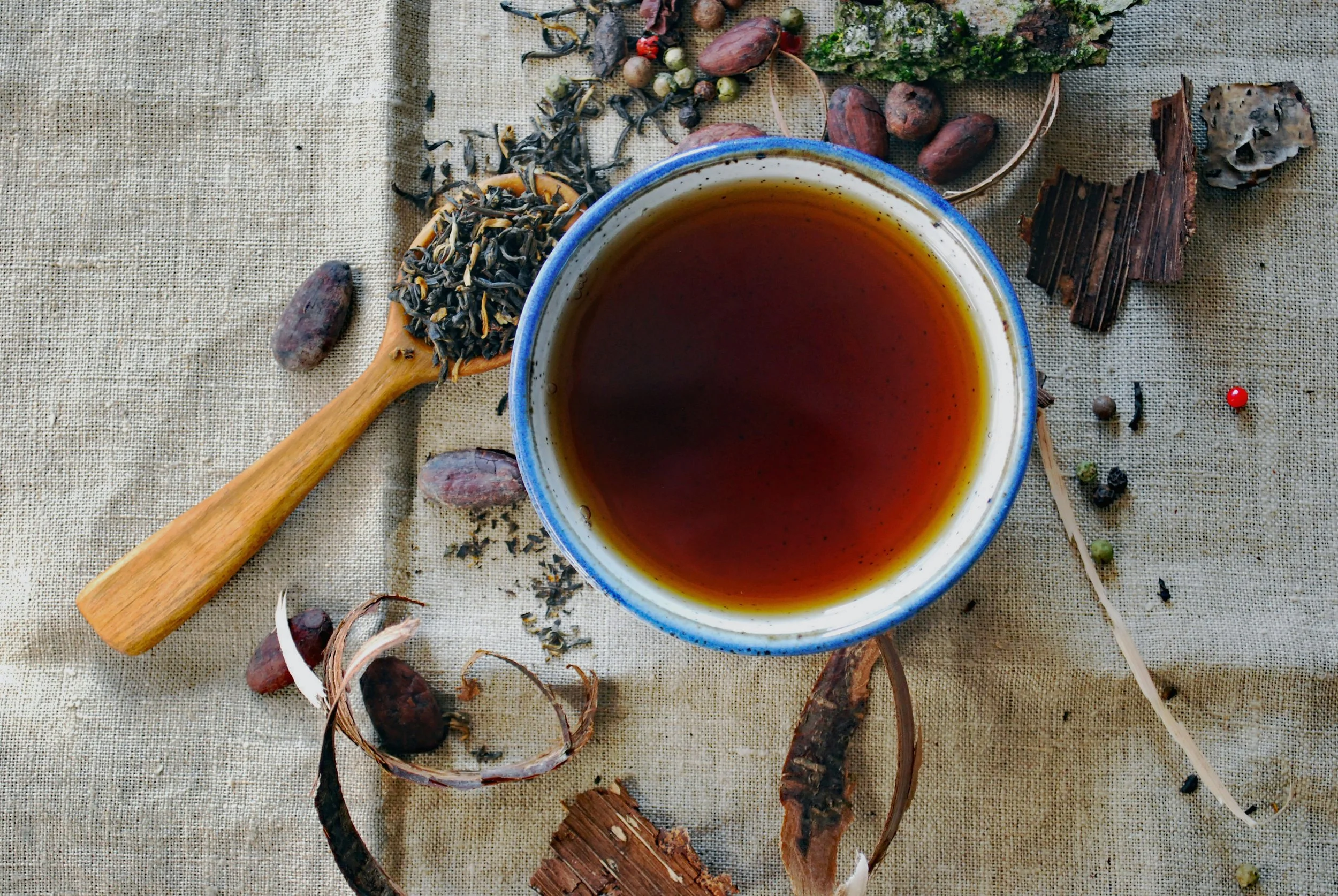
Understanding Herbal Tea Basics
In herbal medicine, what most people call herbal tea is technically an infusion, hot water poured over plant material, which extracts the plant's water-soluble constituents. This works well for leaves, flowers, and soft stems. Roots, bark, and seeds generally require a decoction, simmering in water, to extract their properties effectively.
Commercially packaged tea bags often contain what the industry calls "fannings" or "dust," the broken, oxidized remnants of herb processing that have lost much of their volatile oil content. Whole dried leaves and flowers, purchased in bulk from a reputable supplier, are a substantially more potent and fresh product.
I buy the majority of my herbs in bulk from Wish Garden Herbs and from trusted Amazon suppliers who sell organic whole-leaf herbs.
The Three-Part Blending Framework
Base Herbs (50 to 60% of blend): The primary therapeutic herbs. They tend to have a milder flavor and are palatable in larger amounts. Chamomile, lemon balm, oat straw, and red clover are classic base herbs.
Supportive Herbs (30 to 40% of blend): These enhance and complement the action of the base herbs. Passionflower, skullcap, or nettle leaf might serve this role depending on your blend's goal.
Accent Herbs (5 to 15% of blend): These add flavor, aroma, or a small but meaningful therapeutic contribution. Lavender flowers, rose petals, peppermint, cinnamon, or ginger are common accent herbs. A little goes a long way.
Safety Principles
Start with herbs that have well-established safety profiles: chamomile, lemon balm, oat straw, rose, lavender, passionflower, and red raspberry leaf are all appropriate starting points for most healthy adults.
Use one new herb at a time initially, so that if you notice any reaction you can identify the cause.
Research contraindications before using any herb if you take medications or have health conditions.
More is not always better. Start with lower quantities and adjust based on your experience.
Three Beginner Blends
Blend 1: Evening Calm Tea
2 parts dried chamomile flowers
1.5 parts dried lemon balm
1 part dried passionflower
0.5 part dried lavender flowers
Brew: 1 heaped tablespoon per cup of near-boiled water, steep covered 8 to 10 minutes. Drink 30 to 45 minutes before bed.
Avoid if: taking sedative medications, thyroid medications, or pregnant.
Blend 2: Digestive Comfort Tea
2 parts dried chamomile flowers
1.5 parts dried peppermint leaf
1 part dried fennel seed (lightly crushed)
0.5 part dried ginger root or a small piece of fresh ginger
Brew: 1 tablespoon per cup, steep covered 10 minutes. Drink after meals.
Note: Avoid peppermint if you have GERD or hiatal hernia.
Blend 3: Morning Clarity Tea (caffeine-free)
2 parts dried tulsi (holy basil) leaf
1 part dried peppermint leaf
1 part dried rosemary leaf
0.5 part dried lemon peel (food-grade)
Brew: 1 tablespoon per cup, steep covered 7 minutes. Drink in the morning.
Avoid if: pregnant (rosemary), or taking blood thinners (rosemary, tulsi).
Storage and Sourcing
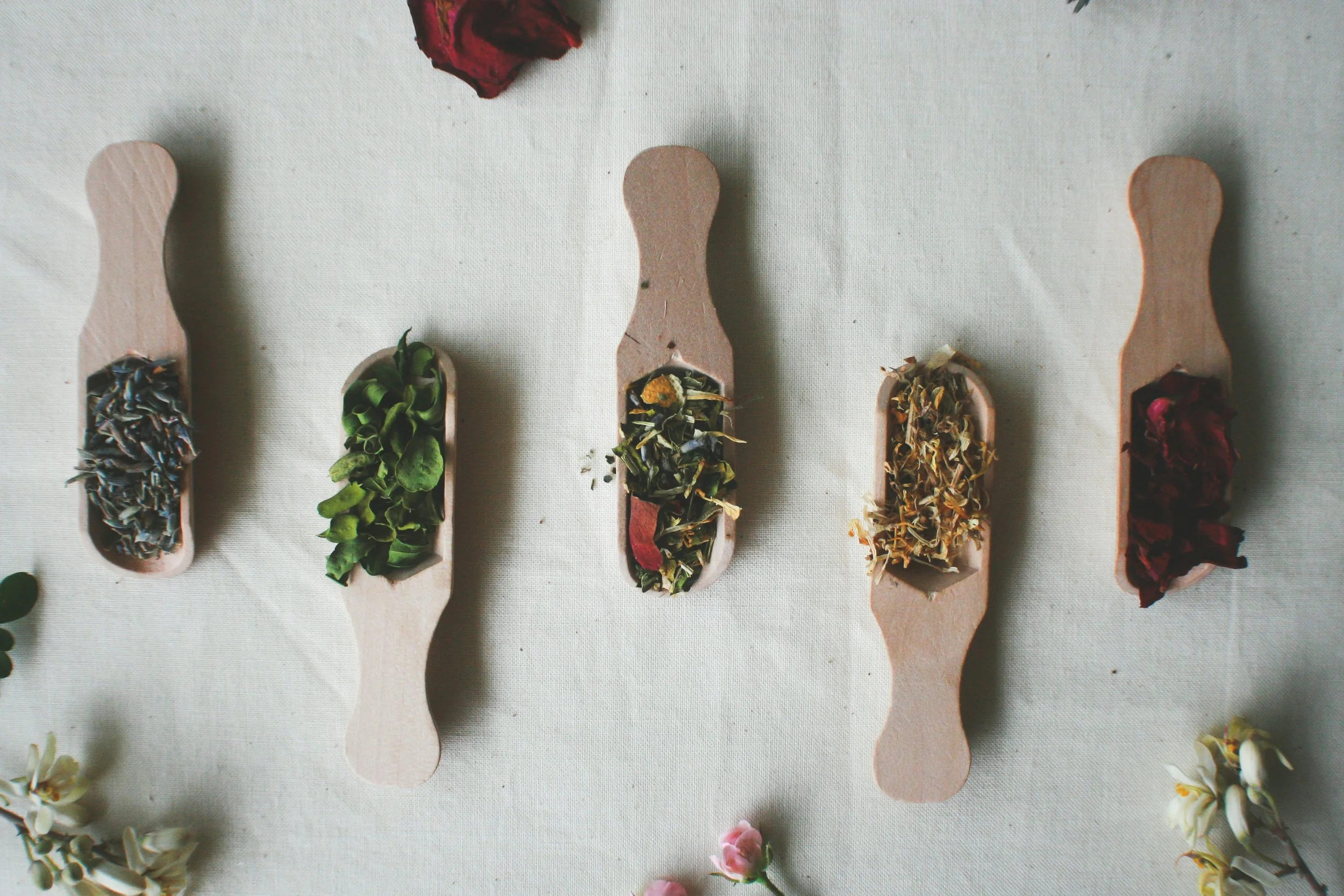
Store dried herb blends in airtight glass jars away from direct light and heat. Most dried herb blends retain their potency for 6 to 12 months. Label each jar with the blend name, date made, and ingredients.
I source from Wish Garden Herbs for their commitment to clean, responsibly sourced herbal products, and supplement with bulk organic herbs from Amazon.
The information in this post is educational and does not constitute medical advice. Please consult your healthcare provider before making changes to your wellness routine.
